

J. G. Mendel
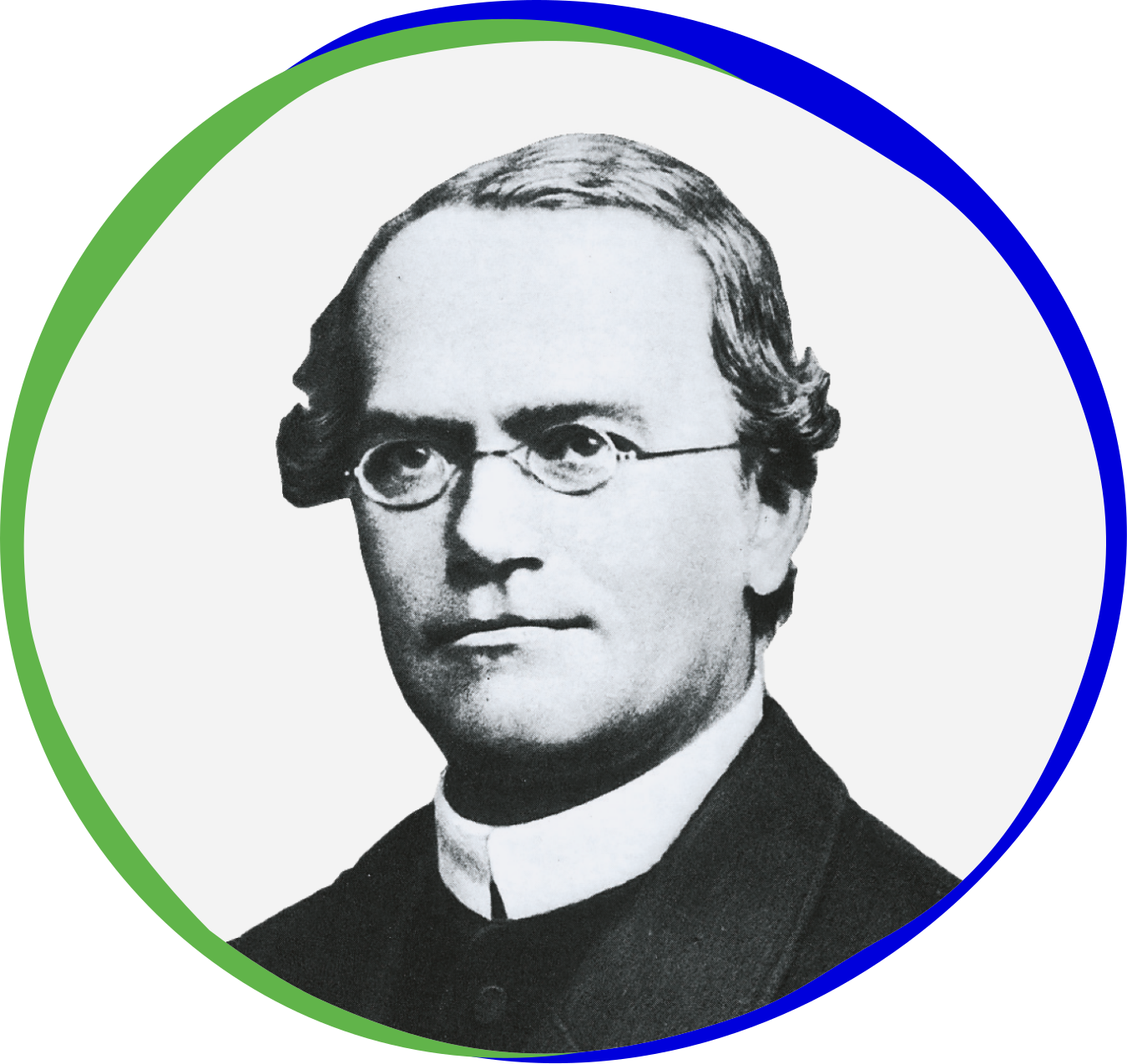
Johan Gregor Mendel
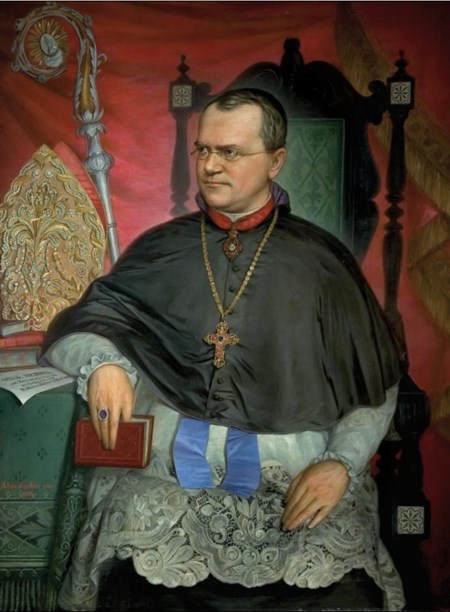
G. J. Mendel is the discoverer of the basic principles of inheritance and a world-renowned founder of genetics. He served as a priest and later as the abbot of the Augustinian monastery in Old Brno.+

The Life of Gregor Johann Mendel
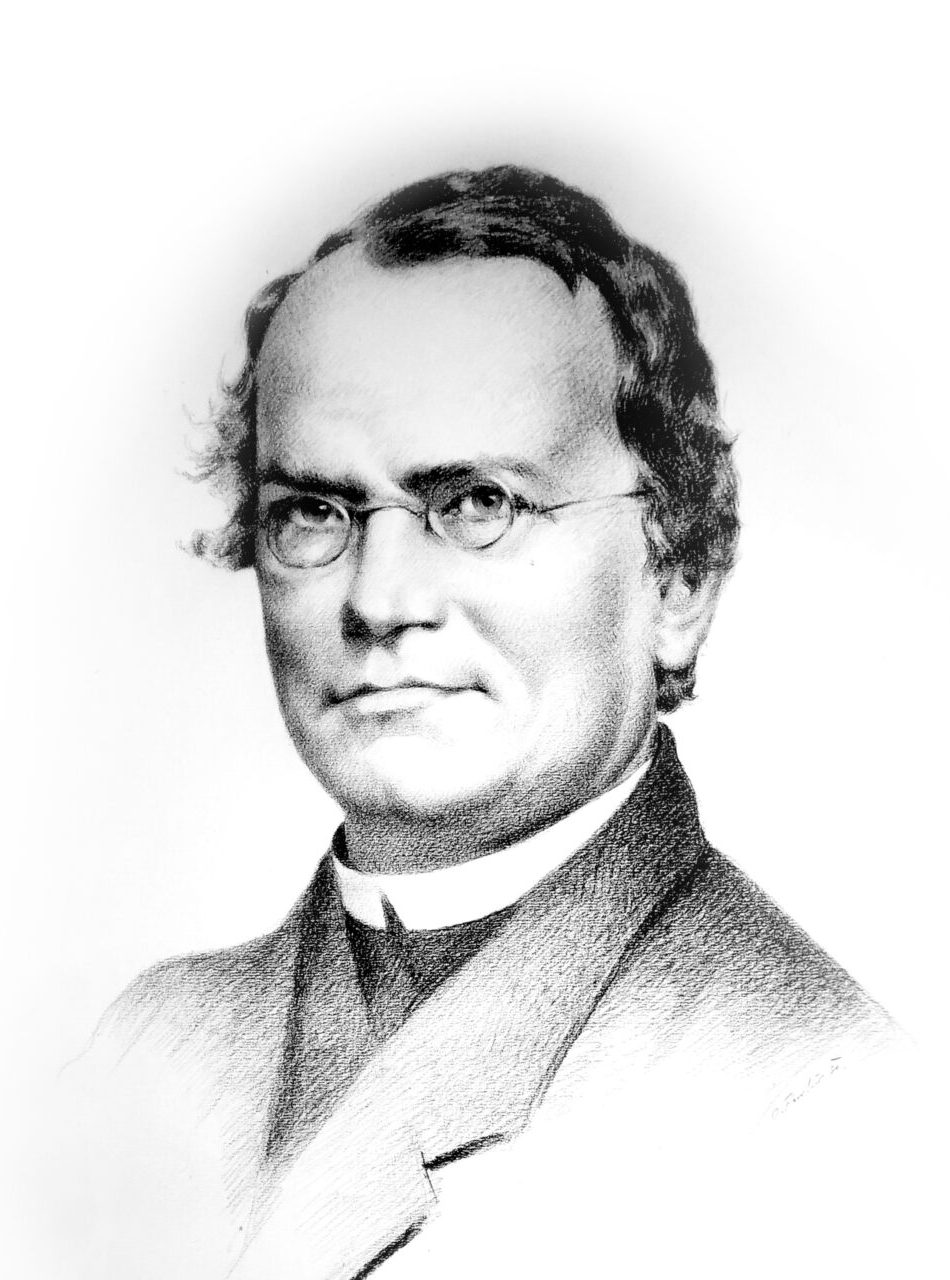
Gregor Johann Mendel (July 20, 1822 Hynčice – January 6, 1884 Brno) was a naturalist, the founder of genetics, and the discoverer of the basic laws of inheritance. He served as a monk of the Order of Augustinians and later as the abbot of the monastery in Old Brno.
Johann Mendel was born on July 20, 1822, into a family of German-speaking small farmers in Hynčice (German Heinzendorf bei Odrau) in Silesia, in house no. 58 (now no. 69) to Anton Mendel and mother Rosina, née Schwirtlich. Today, Hynčice is part of the municipality of Vražné in the Nový Jičín district in the Moravian-Silesian Region. The birthplace of J. G. Mendel is a relatively large farmstead, which was registered as a cultural monument in 1966.
Experiments with Peas
In the premises of the Augustinian monastery, Mendel conducted experiments with pea hybridization from 1854 to 1864 to determine how their individual traits are inherited. He prepared carefully for his experiments, and it was no coincidence that he chose this particular plant, as he was well aware of its advantages. He obtained 34 varieties of peas from stores and then observed the stability of their traits for two years.
He ultimately selected 14 varieties that exhibited pairs of seven well-distinguishable traits (for example, pairs of varieties with yellow seeds and green seeds or purple and white flowers, etc.)
He presented a lecture on the results of his experiments in installments at two meetings of the Natural History Society (Naturforschender Verein) on February 8 and March 8, 1865, in the building of the Higher State Real School at Jánská Street 22. One of the most valuable artifacts owned by the Augustinian Abbey is the original manuscript of Gregor Johann Mendel from 1865, titled Versuche über Pflanzen-Hybriden (Experiments on Plant Hybrids).
Without Gustav von Niessl, the secretary of the Natural History Society, who requested the manuscript of the lecture from Mendel and published this work in 1866 in the society’s yearbook Verhandlungen des naturforschenden Vereines in Brünn, the world would probably not have learned about this Mendel’s work and lecture. On the title page of Mendel’s manuscript, Niessl’s handwritten note ordering 40 copies for Mendel still exists today. Mendel sent special prints to scientists whom he believed could understand his work.
In addition to the special prints, the Natural History Society sent bulky volumes of the yearbook with Mendel’s work to 133 learned societies, scientific academies, universities, and associations in Europe and overseas.
He presented a lecture on the results of his experiments in installments at two meetings of the Natural History Society (Naturforschender Verein) on February 8 and March 8, 1865, in the building of the Higher State Real School at Jánská Street 22.
Without Gustav von Niessl, the secretary of the Natural History Society, who requested the manuscript of the lecture from Mendel and published this work in 1866 in the society’s yearbook Verhandlungen des naturforschenden Vereines in Brünn, the world would probably not have learned about this Mendel’s work and lecture. On the title page of Mendel’s manuscript, Niessl’s handwritten note ordering 40 copies for Mendel still exists today. Mendel sent special prints to scientists whom he believed could understand his work.
In addition to the special prints, the Natural History Society sent bulky volumes of the yearbook with Mendel’s work to 133 learned societies, scientific academies, universities, and associations in Europe and overseas.
Mendel the Beekeeper
Beekeeping was Mendel’s passion. His father introduced him to the basics of beekeeping. In the abbey, where Mendel arrived in 1843, he found ideal conditions for beekeeping.
In Brno, in 1854, a beekeeping section of the Moravian-Silesian Society for the Improvement of Agriculture, Natural History, and Local History was established, which between 1868 and 1869 grew into its own Moravian Beekeeping Society. A significant figure in beekeeping was F. X. Živanský, who introduced Mendel to the society in 1868.
In the same year, Mendel had a bee house built for 15 bee colonies with a storage room and a small workshop. During the peak of his beekeeping activities, he had additional colonies on the land near the bee house. Behind the bee house is a cellar where Mendel originally tried to winter the colonies, which proved unsuitable due to humidity. The bee house is a cultural monument.
In addition to experimenting with various wintering methods for bee colonies, he also advocated for the planting of honey-bearing plants on the slopes of Špilberk Castle and developed a mathematical model for evaluating the ongoing honey flow.
We primarily know about Mendel’s beekeeping through short communications recorded in the bilingual magazine Včela brněnská. Thanks to them, we also learn about the bitter experience with a dangerous bee disease known as brood rot. Mendel destroyed all his colonies and disinfected the equipment, which he recommended that other beekeepers also do. This practical solution still applies today.
Mendel was among the leading beekeeping researchers of his time. His significant contribution was that he made his knowledge available to the beekeeping community whenever someone showed interest.
Mendel as a Meteorologist
Mendel, in his meteorological measurements, followed in the footsteps of Dr. Pavel Olexík, the chief physician of the hospital at St. Anne’s in Brno, who was a great role model for him and with whom he collaborated. Mendel took and recorded temperature and air pressure measurements three times a day at precise times.
Mendel’s first work in the field of meteorology, “Notes on the Graphical-Tabular Overview of Meteorological Conditions in Brno,” was published in German in 1862. In this work, Mendel publishes measurements that Olexík conducted. Between 1863 and 1866 and in 1869, Mendel published “Meteorological Observations from Moravia and Silesia.”
In 1868, Mendel became the abbot of the Augustinian monastery. In the monastery grounds, Mendel established a meteorological station in 1878. At this station, he conducted measurements for the k. k. Central Institute for Meteorology and Geodynamics in Vienna. Here, in addition to temperature and air pressure, he also measured precipitation and extreme temperatures on the experimental plot. He meticulously recorded everything in graphs and tables. Besides the weather, he focused on determining the groundwater level in the well, the state of ozone in the air, and he also observed sunspots.
Mendel also noticed extraordinary meteorological phenomena. In the article “The Whirlwind of October 13, 1870,” he was the first in the world to describe the occurrence of a trombe (tornado), which damaged the abbey and part of Brno in October 1870.
The last measurement report filled out by Mendel comes from July 1883, when the ill Mendel could no longer observe and measure, and on January 6, 1884, Mendel passed away.
Mendel recorded his meteorological observations for five years and one month. Even in his work in the field of meteorology, his meticulousness, precise scientific work, and excellent knowledge of nature are evident.
Mendel was buried at the Central Cemetery in Brno in the Augustinian crypt. The requiem in the church was conducted by the Laš native Leoš Janáček, supported by the monastery during his studies in Brno.


